Monday, March 9, 2009

Friday, March 21, 2008
My struggle for independence
When I was growing up in school, I viewed Tibet as this magical land of spirituality, peace and harmony. The name 'The Roof of the World' seemed to describe its holiness and breath taking beauty. While reading Tintin in Tibet, I wondered whether I would ever be able to meet the affable and youthful monks like Tintin did. How little I knew about this great nation! Even while I was in college, I only knew that Dharamshala had a significant Tibetan population and His Holiness the Dalai Lama resided there, but I had no clue about its painful history. Face it, I was only into Tibetan markets and momos.
A few years have passed and I am now a lot more aware about my neighbouring country, my fellow human beings. And now when I think about Tibet, I feel a great pain and suffering in my heart, as if I was a Tibetan in my previous birth. If I even begin to imagine the kind of oppression and frustration that each and every tortured Tibetan soul must be facing, I feel this great burden on my heart and I desire to do something to support the cause of Free Tibet!!
I wonder how the Chinese government can be at peace with their enforced domination which is based on their arguement that their ancient monarchs and dynasties ruled Tibet through surrogate authorities. How can they ignore the fact that since the beginning of its millitary domination in 1949, Tibet has been struggling and pushing and fighting for its freedom. Just because Ashoka ruled over many parts of the neighbouring countries does not give India the right to storm into another nation and force our rule over them. Could China be giving more priority to historical facts over the voices of all the Tibetan people who have been shouting for independence since 1949?
A lot of people in India look upto China and its cities as role models of economic development. We strive for our GDP growth to emulate the Chinese story. There is so much hope that one day the Indian Elephant will outlast the Chinese tiger (or is it dragon?) WHAT IS THE POINT ? Is it more important to be the rulers of economic forces or the champion of rights? The Left parties often prod the other parties to condemn the oppression of any country but why does it remain silent in the case of Tibet? It is all right to be ambitious in our dreams but we must be brave in our criticism as well. So if its a country whose idealogy is revered by a political party, the misdeeds of that country should also be reprimanded. If China wants to project itself as an emerging superpower then let it channel its power with justice, humanity and transparency. It blocks all information on the Internet and media that it forgets that even Iraq allowed UN inspectors at its nuclear plants. The latter had nothing to hide about its deeds, is it another story in the Chinese suppression of the Tibetan protests?
A few days before I was proud to be in the midst of two hundred young people marching for a Free Tibet, their passion and their emphasis on the non violent nature of the struggle was humbling and inspirational. The group who mostly comprised of college students spoke about how their movement was based on ahimsa and karma. Many of them shared stories about how they are being indoctrinated in schools by the Chinese education system, as young students they had no idea about whether there was a national flag of Tibet, what was their culture, their history. They spoke about how they were confused about their own history because they were told by their parents one thing and were taught a completely different thing in schools. A young boy rightly said that it is like somebody barged into your house, threw your siblings and parents out of the house, shot your friends and told you that you can continue to stay in the house only if you abide by their rules. Put yourself in the shoes of a Tibetan soul and feel what he or she is going through in your heart.
All those people who talk of the Tibetan struggle as a lost cause, I hope they do remember that the story of our independence also spanned over many decades.Yet I feel so sorry that instead of complete independance many people in Tibet are resigned to settle for complete autonomy instead. In other words, Im telling the person who has occupied my house that he or she can continue to be the ruler of my house but I would like to become a paying guest, so atleast I can lead my life in my own manner. I have lost my home, my land to this mighty bully. I only dream that the demand for autonomy would be granted, but still one day the Tibetan freedom that many people around the world dream of would become a reality..
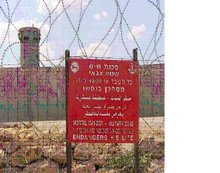
Here below I have penned a few lines for the people struggling for freedom in Tibet and Palestine, albeit in a non violent manner!!!
One day I dream of peace,
Of a nation full of proud people
Ecstatic in their celebration of their freedom.
Their land and homes are theirs again
From beneath the graves its spirit and culture will be reborn.
A nation full of happy people
who on that day will shout in one voice
'We have won our Independence'
The above is a dream, a hope, a prayer and for sure a glimpse of the future!!
See the video below
Saturday, March 8, 2008
Media loves the term Moderate Muslim
I just saw a debate today on bbc world in which the topic was 'Are the Moderate Muslims Failing to Reign in Extremeism’. It was debate which had representatives of diverse opinions and backgrounds including this one lady who could give George Bush a run for his money for being the most dumb person on the planet..
If any of you ever get to catch this debate on television then do watch it because it is very thought provoking and insightgul. The angle that I wanted to explore in this debate is why the mainstream media relegates the role of reigning extremeism to moderate muslims only. Does that mean I am absolved of any responsibility if I belong to a different religious community? That only if you are a part of that community can you step up to solve its problems? Should I forget that it is my role as a citizen of this world to reign in extremeism irrespective of my religion, caste, colour, economic or geographic background? My silence irrespective of my background encourages the rise of violent extremeism that we see in the world.
I become very angry with the mainstream media when they use terms like moderate muslim failing…hell ech and everyone of needs to do something but we are not, all of us are failing. Hell are they trying to divide us on the lines of religion by focussing on the religious identity of who is failing and who is not? And then I become very suspicious of the media when they start speaking like this. Through this debate they divide a community into muslims and non muslims and then encourage the non muslims to think as if the muslims are not capable enough to solve the problem of their community.
And why doesn’t the media use the term moderate when it comes to other religions like Hinduism , Sikhism and Christianity. Why don’t we hear today in Maharastra and Gujarat that moderate hindus are failing to reign in extremeism. When Sikh families kill the daughters in their families if they have married somebody from a different community, why dont we have debates about the failures of moderate Sikhs? And with these questions I begin to question the intention and intelligence of the media companies which highlight such debates. After all every individual or organization has a set of beliefs and principles according to which they act.. so are these debates reflective of their way of thinking?
When I look at my responsibility of spreading the light of humanity against the waves of extremeism then I should not be looking through the lenses of religion or community the only lens that I need to put on are those that make me realize that im a citizen of this world and I need to set my world in order.
Saturday, May 5, 2007
Privatisation - paint it not with one stroke -part 3
Nationality of multi nationals - its shares, coffers, shareholders.
Its a tempting to think that since many exploitative private multinationals come from the West, they are part of a larger design of the West to dominate the world. But certain multinationals have promoted their self interests despite harming the interests of the citizens of the same country to which it belongs. Here are a few short stories that I have recently found about that have shocked me and have added more chapters to my learning journey about privatisation.
GM and the automobile industry
Anybody who has been to California, USA tell you that you need to have a car there to get around because there is hardly any form of public transport. The last person to tell me this was my friend who visited Los Angeles six months back and had to rent a car everyday despite being there only for four months. Well, one can thank the automoble industry for that because of what happened in the 1920s. Before road transport USA always had its railway systems which it got built by the Chinese. In the late 1920s General Motors secretly began to purchase the railway and trolley systems throughout the United States including Los Angeles, using a number of front corporations.GM then ripped out all the existing tracks, dismantled the systems, tore down the overhead wires. The trolley companies were turned into bus lines, and the new buses were manufactured by GM. The period defines a period of monopoly for automobile industry wherein they influenced the government not to invest in public transport so that the demand for cars increases. In 1947, GM and a number of its allies from the automobile industry who were also in the sceme were indicted on federal anti-trust charges. To know more read the book Asphalt America.
McDonalds and the fast food restaurant industry
The restaurant industry is now America's largest private employer and it pays some of the lowest wages. McDonalds is one of the big players, it annually hires one million people, larger than any other organization in America, public or private. But while these companies might be a boon for the employment scenario they certainly know how to keep their costs low so that they can increase their profit margins. In 1972 the fast foof industry lobbied the Congress and the White House to pass a new legislation known as the 'McDonald' bill" that would employers to pay sixteen and eventeen year old kids wages 20% LOWER THAN THE MINIMUM WAGE. The entire focus of the fast food industry is on technology so that the machines in the kitchen complete the process of making the processed food with minimum input of the workers. Thus the only skills that a fast food employee needs is how to get to the office on time and smile at the customers. So despite spending most of their millions on research of technology the fast food corporations still accept hundred of millions of dollars from government susbsidies for 'training' their workers. The fast food industry pays the minimum wage to higher proportion of its worker than any other American Industry. The companies only strive to drive the minimum wage lower and reduce the training costs for workers by making the kitchen machines more intelligent. All this while the average corporate executive bonus has had an annual increase of approximate 20% each year (1997). McDonalds has in the history gone to the extent of even shutting down its shops if it senses that the workers there are beginning to organize into a union, making their interest very clear. Sorry is somebody screaming labour market exploitation ????
Cargill, IBP - and the American farmer
In the 1980s large multinations like Cargill, IBP, ConAgra were allowed to dominate one commodity market after the another. Farmer and cattle ranchers began to lose their independence, essentially becoming hired hands for the agribusiness giants or being forced off the land. The scenario is very similar to what has happened to India because of these companies. Rural communities in America are losing their middle class and are becoming socially stratified, divided between a small, wealthy elite and large numbers of the working poor. The United States now has more prison inmates than full time farmers.
Note: Most of the above material has been taken from the book Fast Food Nation - Eric Schlosser. Read the book to find more damning facts about how McDonalds is impacting the world.
Privatisation - paint it not with one stroke - part 2
Green Revolution- everything modern need not be good.
When I look at the above two words and remember what I studied about it in school, the words that come to my mind are; 'successful', 'modern agriculture', 'boon to India', 'modern farming'. Well as they say dont believe that everything you read by default is accurate. Last month as I was preparing for rural camp for adolescent students,I came to realize how far the Green Revolution was/is away from the above labels. The names of companies of Monsanto and Cargill have become a lot more familiar and I had to grudgingly add another chapter of how our servile homage to anything that resemble private company participation has resulted in destruction of lives of fellow Indians and their land which is their soul,sustenance and dignity.
During the camp in April, the school students were interacting with a few farmers in the Rohilla Palliwal village of the Chamoli District in Uttaranchal. The students asked the farmers whether they had heard about the Green Revolution/Hari Kranti and if they had whether they had employed the suggested techniques. The farmers responded by saying that they had heard about the Green Revolution and had even employed its methods, but they rejected it within a few years and switched back to their traditional farming methods. For the first two years the seeds, fertilizers that they bought from the comapnies resulted in an increased yield but later they saw that the soil was losing its fertility because of the new seeds and even the nearby fields which were not using the seeds were being affected. They wisely shifted back to the traditional methods and thus have regained their rich soil on which they can grow diverse crops.
During the 1980s large multinationals like Cargill, Monsanto started to dominate the agricultural scenarios of many countries including India. They promoted their hybrid genetically modified seeds as an option to obtain increased yield and pushed many governments to accept their products along with the support of international funding agencies. Now see what happens when you hand over something like farming to private multinationals.In traditional farming the famer can use the seeds that he/she has to grow the next year's crop but not so in corporate farming which operates on the principle of profit. The GM seeds has a terminator gene which disallows it to be used for next year's crop. This means that the poor farmer has to buy seeds from the company every year. And mind you these seeds are definitely not cheap, plus as we know corporate love to introduce specific value add services. So the fertilizers, pesticides that are compatible with the seeds are also available only with these companies. So the poor farmer has to take loans to buy the expensive seeds and fertilizers and since again the private financial institutions loath to give loans to such a seemingly high risk segment(doesnt matter if the Grameen Bank has made a mokery of this logic), he/she has to depend on the loan by the local money lenders which charge a shockingly high interest of 30%-40%. Isnt it shocking that the seeds and fertilizers for which the farmer takes on such a huge burden only leads to further poison in his soil and decreased fertility.The poison also spreads to nearby water sources and other plant species leading to several diseases for new born babies, children and animals.
Such challenges and increased debt from the private sponsored Green Revolution has led to the phenomenon that in the last 20 years India has seen such a huge spate of farmer suicides. The number of farmer suicides in the last 20 years is crazy and is happening for the first time in India. So be very cautious when you think of agribusinesses, when you want to make farming a commodity segment by giving it to private players because as you know that private multinationals like Cargill and Monsanto are very good in their work. It just so happens that its for their own profits and not for the farmers of any country.
To know more about Green Revolution, click on the below links
http://www.organicindia.com/green-revolution-killing-indian-farmers.php
http://www.democracynow.org/article.pl?sid=06/12/13/1451229
Friday, May 4, 2007
Privatistion - paint it not with one stroke - part 1
When I was in school, I used to be an avid debater. I use to love making speeches, arguements and expressing my thoughts on the stage. One of the debates that I participated in was on the topic 'Public Industry Vs Private Industry'. At that time I was speaking on the behalf of the private industry. Today the only point that I recollect from that debate is that private industry is more efficient than public industries. Growing up over the years as one reads of sick state PSUs being disinvested and private companies coming out with new technologies and meets impressive people from the corporate world, that point has become even more strongly etched in my belief systems.
After working in the development world for some time, I was met with a voracious wave of people who were anti private companies. This was difficult for me to grasp wth as I had entered this world from the corporate world where I had met exceptional people doing exceptional work. I brushed away these protests with an opinion that stereotypes exist even in people working in the development sector. In the recent times I have to got to know a few nuggets of information which has led me to grudgingly empathise with the people. Many of these stories have had huge ramnifications in the world and has led me to believe that even I had painted the entire private industry with one stroke and had a stereotypical thinking about it. In the debate about private vs public industry one should not glorify the role of the private industry because they too have their very large and dangerous demonic stories which most of young people might not know.
After working in the development world for some time, I was met with a voracious wave of people who were anti private companies. This was difficult for me to grasp wth as I had entered this world from the corporate world where I had met exceptional people doing exceptional work. I brushed away these protests with an opinion that stereotypes exist even in people working in the development sector. In the recent times I have to got to know a few nuggets of information which has led me to grudgingly empathise with the people. Many of these stories have had huge ramnifications in the world and has led me to believe that even I had painted the entire private industry with one stroke and had a stereotypical thinking about it. In the debate about private vs public industry one should not glorify the role of the private industry because they too have their very large and dangerous demonic stories which most of young people might not know.
Wednesday, April 11, 2007
From Me to We to Me - part 2
Before reading this please read the previous post.
As I turned away from the parking lot, I started reflecting on some of the aspects of the just concluded interaction. Rehmanji had asked humbly what was wrong in what was he doing? After all he is looking after the cars and taking the money that people were offering him, tt was not as if he was forcing them to give money. But in my mind isnt this what conning is all about? Pretense. You look and pretend as if you are a parking attendant by waving the cars, blowing a whistle, giving superficial instructions to motorists about how to park their vehicles (mind you they only went upto to the two wheelers) and then hold out your hand to ask for money. People might overlook the free parking sign and mistake them to be attendants in which case they are clearly being taken advantage of. It is a racket.
Rehmanji also said that he has to feed his children, which is a point raised by people who defend the behaviour of auto-rickshaw drivers who jack up the prices.
They say that some people are in such economically challenged environments that they need to resort to such means and financially stable people should be supportive and pay up, though you might convey to the autorickshaw driver that you know are being taken for a ride but you are still willing to support. But the above logic could also apply to con men/women and in some cases to thieves, so it definitely doesnt make sense to me.
But if Rehmanj and his friend are doing a necessary job of looking after the cars and taking whatever money that people have to offer or not offer, again whats the harm? In a country where you need a license (as well as give a exam) to lift the baggage of people aka a coolie, why should it be any different for Rehmanji and his friend? Every formal business or service needs a legal sanction, so the same should extend to this case. To me it is just an excuse to defend the racket.
The most important question that came to my head, had me thinking about it for a long time. In the neighbouring uptown Khan Market, there is a free parking area in which there are people who do the same thing as Rehmanji. How come I didnt bat an eyelid then, didnt even think, and even paid when they guided my car out of a difficult situation. Is it an issue of identity, because in a posh crowded market the service seemed ok. The first feeble defense that I have is that intuitively I have not sensed any racket there( and my intuition is very strong) and actually thought this to be a value- add service provided by the shopkeepers. Recently all of them have also started wearing NDMC jackets, maybe it is a sign that they have legal authority. As I write this I have decided to ask them the next time I go to Khan Market.
Another thought which came to my mind is why I was being so uptight about something small? Why dont I speak about bigger issues? but what happens when big issues do arise, one feels intimidated and leaves everything to somebody else, most often it is the State. In other cases you would need a mass mobilization. So I thought ofcourse one should take up issues that can be engaged with on an individual level.
The next big question which arose is am I being selfish? Clearly the issue of being conned for money is something I feel strongly for and that is why I went to the extent of harassing Rehmanji and Sonuji. But in this case what is self? I wasnt being conned, others were. I felt that I should investigate the racket so that others do not get conned. I wasnt standing up for ME, I was standing up for WE, self was all of us. But I must admit when I reflect on the level of ownership and the intensity of my participation in this issue, I still wonder whether there was an issue of negative selfishness somewhere?
Lastly who am I to be so moral and correct? It is not as if I havent broken rules while driving (talking on the mobile while driving, not wearing seat belt, crossing the red light) But isnt it better that one does the right thing sometimes instead of never doing it. Life is a journey of moments and you have to play by the ear where you decide to take a particular stand in a particular moment. Nevertheless one can also live a life always doing the right thing, i.e. abiding by your principles. I know of two such inspirational people. It is a no brainer and a commendable thing, that living a principle based life is very challenging but nonetheless it is one that we should all aspire for.
So the entire incident and the post incident self reflection and introspection became one whole cycle. It went...
FROM ME TO WE TO ME
Subscribe to:
Posts (Atom)